
Every day carries a story — and November 1 is no exception. Marking the 305th day of the Gregorian calendar year, this date has witnessed some of the world’s most remarkable events, from groundbreaking artistic unveilings to powerful political shifts that changed history forever.
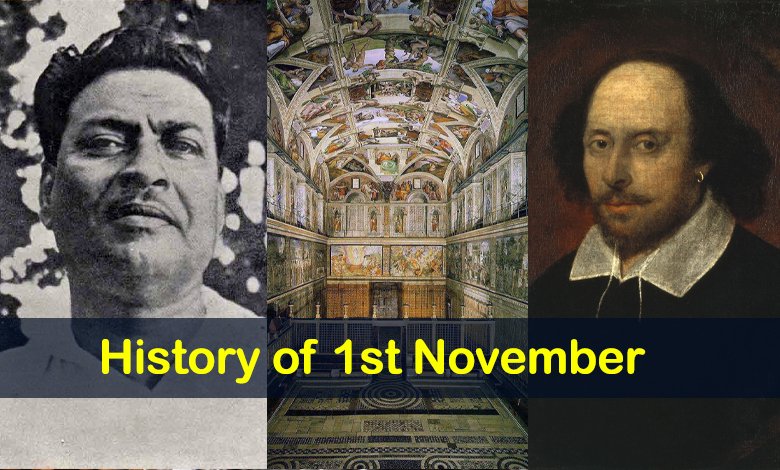
On this day in 1512, one of the greatest artistic masterpieces — Michelangelo’s frescoes on the ceiling of the Sistine Chapel — were opened to the public for the first time, changing the course of Renaissance art. Nearly a century later, in 1604, William Shakespeare’s tragedy Othello premiered at London’s Whitehall Palace, followed by The Tempest in 1611, showcasing the timeless power of English theatre.
Historic Events on November 1
The date November 1 in history has also been marked by natural disasters, revolutions, and scientific milestones. In 1755, Lisbon, Portugal, was devastated by a massive earthquake that claimed around 60,000 lives, a tragedy that deeply influenced European philosophy and architecture.
In 1794, India witnessed the launch of the “Calcutta Monthly Journal,” one of the earliest printed periodicals in Asia, signaling a new age of intellectual awakening. Six years later, in 1800, John Adams became the first U.S. President to live in what is now known as the White House, then called “The Executive Mansion.”
The same date in 1858 marked the transfer of India’s administration from the East India Company to the British Crown, a turning point in colonial history. A few decades later, in 1880, Kolkata introduced its first horse-drawn tram service, revolutionizing public transport in India.
Globally, November 1, 1903, saw Panama gain independence from Colombia, while 1952 witnessed the United States conducting the world’s first hydrogen bomb test, over 500 times more powerful than the bomb dropped on Hiroshima.
Political and Cultural Turning Points
In 1954, Algeria’s independence movement began under Ahmed Ben Bella, reshaping North African politics. Two years later, India reorganized its states under the States Reorganisation Act of 1956, giving birth to Karnataka, Kerala, and Madhya Pradesh in their modern forms. That same year, Purulia district was formed in West Bengal following the Manbhum language movement — a historic step for Bengali identity.
November 1 also holds significance in modern times. On this day in 1992, Islamic University of Kushtia was inaugurated in Bangladesh, and in 2007, the country formally separated its judiciary from the executive branch, ensuring greater judicial independence.
Births and Deaths on November 1
The day has also seen the birth of influential figures such as Aishwarya Rai Bachchan (1973), celebrated Indian actress and former Miss World; AKM Badruddoza Chowdhury (1932), Bangladeshi politician; VVS Laxman (1974), Indian cricketer; and Michelangelo’s intellectual successors like Nobel laureate Carlos Saavedra Lamas (1878) and physicist Robert B. Laughlin (1950).
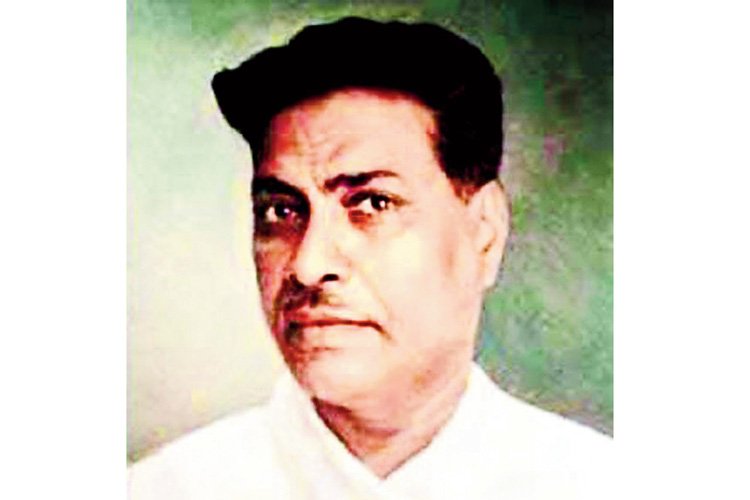
On the other hand, November 1 also marks the passing of some iconic personalities — Bibhutibhushan Bandyopadhyay (1950), one of Bengal’s greatest novelists, and Dinabandhu Mitra (1873), the dramatist who gave Bengal Nil Darpan, the play that ignited a movement.
National and International Observances
Around the world, November 1 is observed as All Saints’ Day in many Christian nations, National Novel Writing Month begins in the United States, National Mine Day is celebrated in India, and Bangladesh commemorates Judiciary Separation Day. It is also Youth Day in honor of Bangabandhu and National Day in Algeria — each event adding layers of meaning to this globally significant date.
November 1 in history continues to remind us that every day holds a mirror to humanity’s triumphs, tragedies, and timeless spirit of progress.