
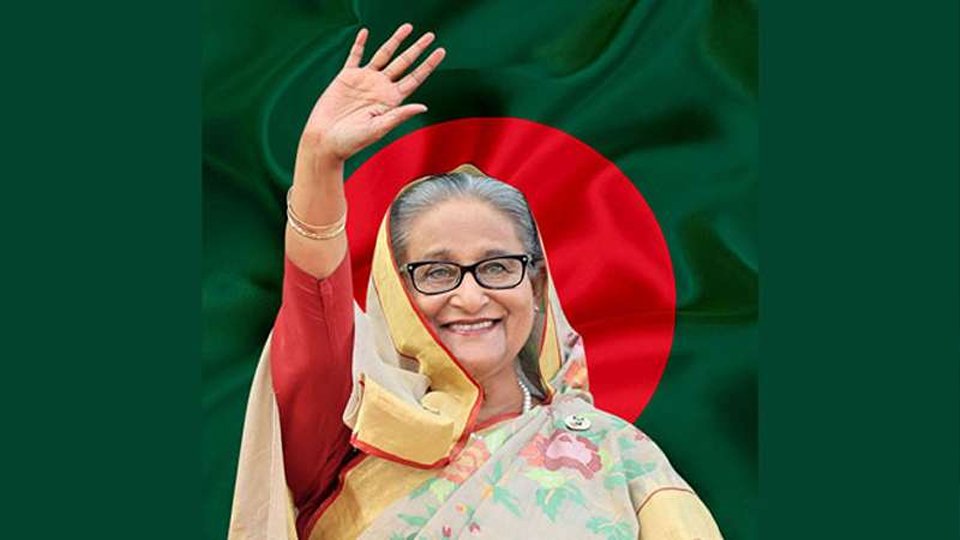
Former Bangladesh Prime Minister Sheikh Hasina, now living in exile in India, has sharply reacted to the death sentence verdict delivered by the International Crimes Tribunal in Dhaka. Hours after the tribunal found her guilty on five counts of crimes against humanity, Hasina released an audio statement calling the judgment “politically motivated, biased, and pre-decided.”
On Monday, the tribunal sentenced her to death for allegedly ordering violent crackdowns during the July uprising, delivering a lengthy 453-page judgment against her and two others—former Home Minister Asaduzzaman Khan and former IGP Abdullah Al-Mamun. But Hasina insists the verdict is part of a larger conspiracy to erase her political legacy and silence her permanently.
Speaking from Delhi, Hasina said, “This is not justice. This verdict is political. All allegations against me are fabricated. The so-called evidence shown in court is neither authentic nor credible.”
She claimed the ruling was engineered by the interim administration led by Muhammad Yunus, saying:
“Bangladesh no longer has an independent judiciary. Those who have seized power are using the court to eliminate democratic forces.”
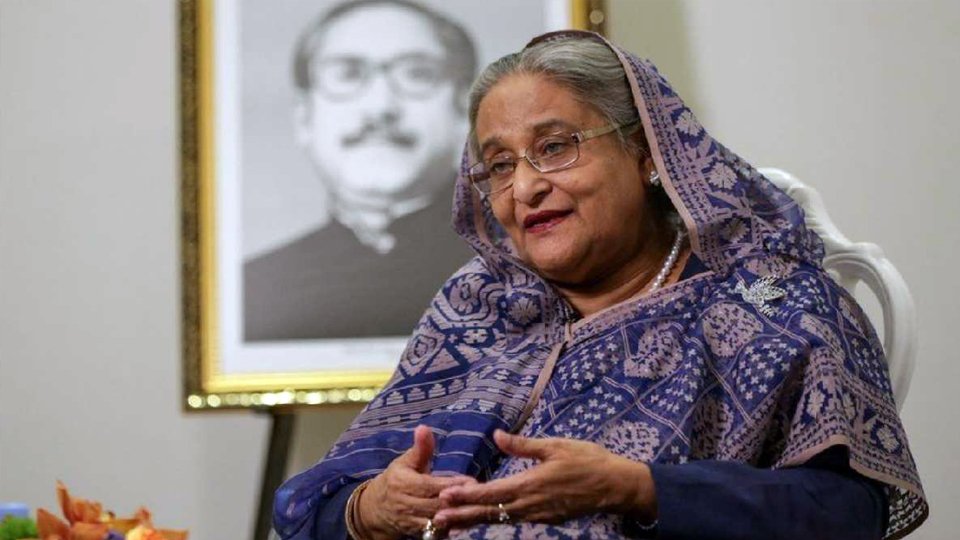
‘Pre-determined decision, not rule of law’
Hasina argued that the trial lacked transparency and fairness.
She questioned why the prosecution withheld witness testimonies, why the investigation report was kept secret, and why videos used as evidence could not be independently verified.
Her words were sharp:
“If this were a fair trial, why hide witness statements? Why suppress forensic reports? Because they know the truth would contradict their narrative.”
She rejected the accusation that she ordered police to fire on protestors, saying,
“I never ordered anyone to kill. In many incidents, police used rubber bullets. Those bullets are not lethal. But the court ignored such facts.”
Hasina further claimed her removal from office was a coordinated attempt to dismantle secular and democratic politics in Bangladesh:
“This verdict is not against me—it is against the people of Bangladesh and against true democracy.”
A verdict that could reshape South Asian geopolitics
The Sheikh Hasina death sentence has triggered strong reactions across South Asia. Political analysts warn that the ruling may deepen existing ideological divides in Bangladesh and strengthen Pakistan-aligned Islamist factions. With Hasina gone, a political vacuum has emerged—one that hardline groups may attempt to fill.
India is watching the situation closely, as Hasina had been New Delhi’s strongest strategic partner in the region for over a decade. Her fall from power and the tribunal’s decision could have long-term consequences for the stability of the India–Bangladesh border and regional security.
Meanwhile, Dhaka has been placed under tight security. After Sunday night’s series of explosions and arson attacks in several parts of the capital, the police remain on high alert. Pro-Hasina supporters in exile allege that the trial was conducted under intimidation and political pressure.
Hasina, however, remains defiant.
“I am innocent. I will continue to fight for the people of Bangladesh—no matter what they do to silence me.”