
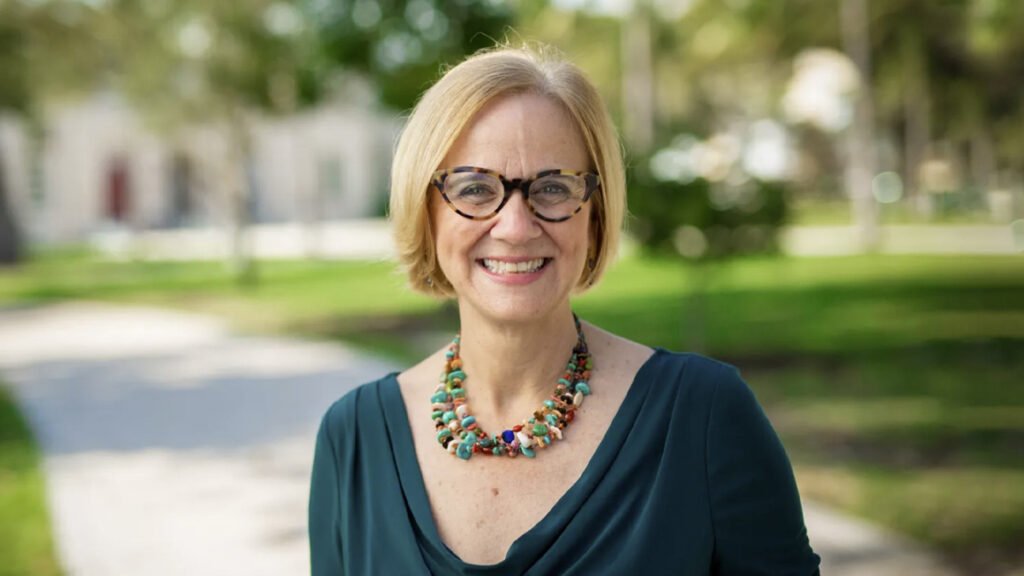
Eileen Higgins made history Tuesday night after winning the Miami mayoral runoff, becoming the city’s first Democratic mayor in three decades and the first woman ever to hold the office. Her victory marks a significant political shift in a region that has leaned increasingly Republican in recent election cycles.
Higgins, 61, a former Miami-Dade County commissioner, defeated Republican candidate Emilio González by a wide margin. The result surprised many observers, especially after Miami-Dade supported Donald Trump in 2024—the first time the county had voted for a Republican presidential candidate since 1988.
A Reversal of Recent Political Trends
Last month, Higgins secured 36% of the vote, earning a spot in the two-way runoff. Her win on Tuesday underscores the changing political mood in a city where 57% of residents are foreign-born, a demographic central to her campaign message.
Republican leaders, including Trump, campaigned aggressively for González. Trump endorsed him twice on Truth Social—misspelling his name both times—framing the race around border security and immigration enforcement.
Higgins countered with a sharply different narrative. She focused on protecting immigrant communities, opposing mass deportation efforts and criticizing federal partnerships with Florida Governor Ron DeSantis on controversial immigration programs, including the widely debated “Alligator Alcatraz” detention facility.

Immigration and Local Issues Prove Decisive
Higgins framed the election as a referendum on federal immigration policies, arguing that national decisions were hurting Miami families. She highlighted the rollback of Temporary Protected Status (TPS) and humanitarian parole programs for Venezuelans, Haitians, and Cubans as issues directly affecting local residents.
“These policies impact our neighbors, our friends, and the people who make this community vibrant,” Higgins said in an interview before the election. “Miami is an immigrant-rooted city. That’s our strength.”
Her platform resonated strongly with voters concerned about rising living costs, housing affordability, and aggressive immigration enforcement.
A Historic First for Miami
Higgins will be the first Democratic mayor since 1997, succeeding Francis Suarez, and the first non-Hispanic leader of Miami in decades. Her win adds momentum to a series of recent Democratic victories in state and local races across the U.S., which party leaders say reflect growing dissatisfaction with national Republican policies.
Democrats Celebrate a Grassroots Success
Miami-Dade Democratic Party chair Laura Kelley called the outcome a validation of months of community-focused organizing. According to Kelley, volunteers placed more than 300,000 phone calls in support of Higgins, part of a broader strategy to reconnect with voters after years of Republican gains in Florida.
“We knew the issues were deeply local—housing, insurance premiums, deportation fears,” Kelley said. “People are feeling these impacts every day, and they wanted leadership that addresses them.”
DNC chair Ken Martin had earlier described the race as a bellwether, applauding Higgins’ “high-energy coalition-building” and predicting national significance if she won.
A 19-Point Margin
According to the Associated Press, Higgins led González by roughly 19 percentage points when the race was called. For Democrats, the win is both symbolic and strategic—an opportunity to rebuild influence in a state long considered impenetrable after recent GOP dominance.