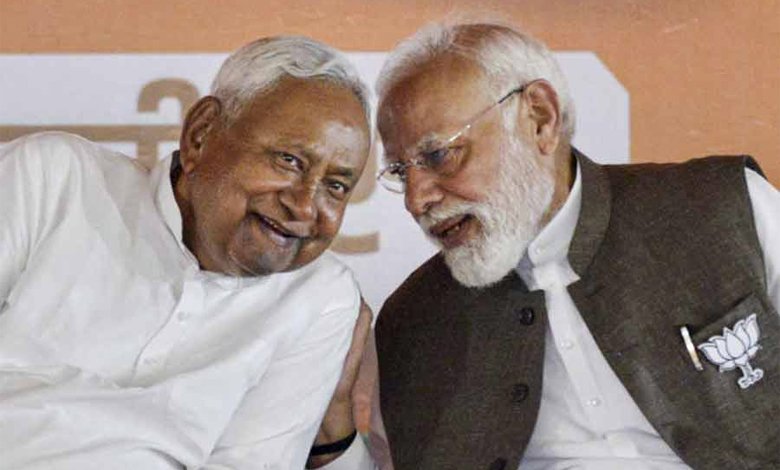
The Bihar election has delivered a clear message—the Nitish-Modi masterstroke has rewritten the state’s political narrative. What the opposition struggled to communicate through long rallies and repeated promises, the NDA secured with a targeted welfare strategy that touched millions directly. At the centre of this strategy was the ₹10,000 assistance scheme for 13 million women, a move that not only empowered female voters but also reshaped Bihar’s electoral dynamics. This resulted in a record 71% female voter turnout, the highest since Independence.
During the campaign, Prime Minister Narendra Modi repeatedly reminded voters of Bihar’s past—kattā, dunali, rangdari—keywords associated with the RJD-era lawlessness. Modi’s sharp messaging resonated strongly with the masses, reviving memories of a chaotic past that many do not wish to return to. Nitish Kumar, meanwhile, focused on schemes that impacted everyday lives, and the ₹10,000 deposit directly into women’s bank accounts strengthened the NDA’s credibility among first-time and rural women voters.
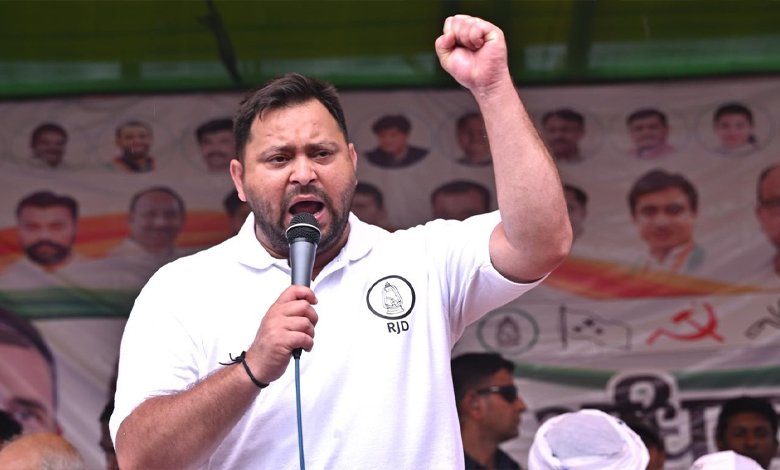
In contrast, Tejashwi Yadav’s promise of ₹2,500 monthly support did not gain traction. Voters trusted what they had already experienced over promises yet to be tested. This became one of the most influential factors behind the NDA’s surge in Bihar.
Nitish-Modi Masterstroke: ₹10,000 for 13 Million Women Shatters Mahagathbandhan
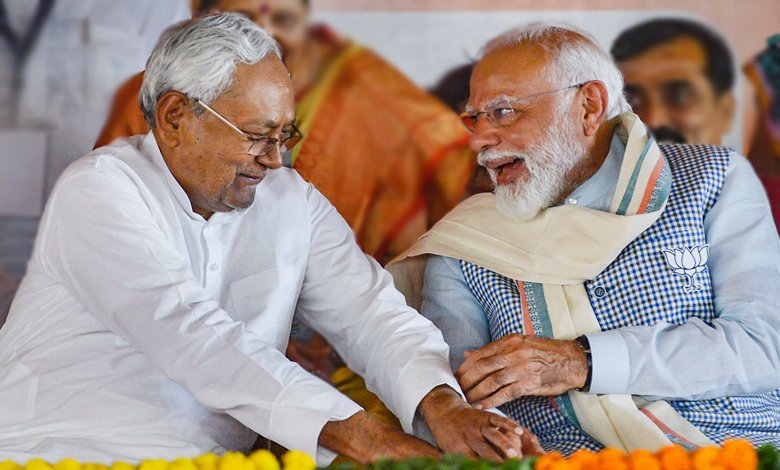
Another major vote-puller was the free electricity scheme, which ensures 125 units of household power at zero cost. In rural Bihar, where monthly income is often limited and economic pressure high, this initiative changed the lives of thousands of families. Households paying nearly nothing for electricity naturally shifted their support toward the NDA’s governance model.
Add to that the pension hike for senior citizens—from ₹400 to ₹1,100—which gave Nitish Kumar’s administration a strong emotional connection with 12 million elderly residents. The combination of financial relief, stability, and trust built over the years worked heavily in favour of the ruling alliance.
The Mahagathbandhan had repeatedly argued that Nitish Kumar had become “weak” due to age and that he was a burden on the NDA. But the election trends proved the opposite. Voters placed faith in Nitish Kumar’s experience, administrative control, and long-standing ability to keep Bihar stable. The narrative that the Chief Minister was “ineffective” collapsed instantly once voters demonstrated their trust through ballots.
Rahul Gandhi’s continuous campaign on unemployment and job creation also failed to produce the expected impact. The NDA’s welfare-driven approach had already reached the grassroots, shaping voter sentiment long before the opposition could generate momentum. In Bihar’s political landscape, tangible benefits outweighed broad promises, especially among women and rural households.
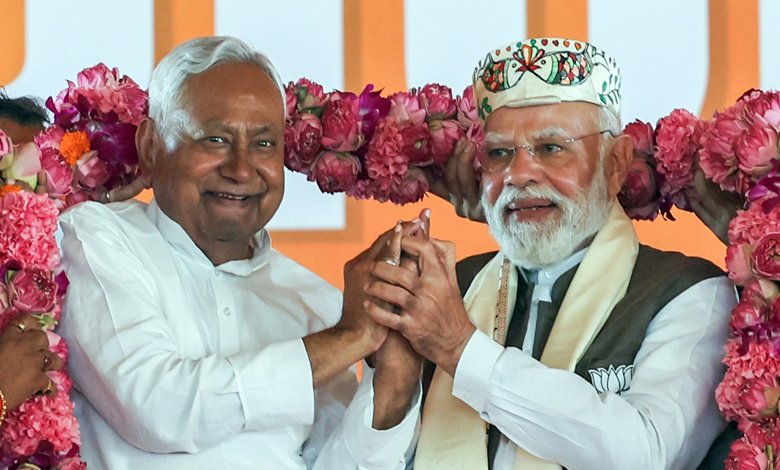
Another key element behind the NDA’s overwhelming success was its internal unity. The five-party coalition worked like a synchronized political machine, with clear messaging, effective coordination, and a shared strategy targeting every demographic group. In sharp contrast, the Mahagathbandhan struggled to present the same level of cohesion. Internal disagreements and inconsistent narratives made it hard for voters to see them as a stable alternative.
Ultimately, the Nitish-Modi masterstroke proved decisive. The combination of direct financial aid, free electricity, increased pensions, and sharp anti-jungle-raj messaging delivered a landslide shift in Bihar’s political equation. The opposition’s kite simply couldn’t fly against the storm created by NDA’s strategy.
In the end, the message from Bihar’s voters was loud and clear: trust, delivery, economic relief, and stability matter more than slogans. And on those fronts, the Nitish-Modi alliance swept past the Mahagathbandhan with unmatched force.